
Defensible Space That Protects Homes and Land
Fire Mitigation in Battle Ground for Rural Properties, Brush Clearing, and Vegetation Management
Homes and structures in wooded areas face wildfire threats when vegetation grows unchecked near buildings, along access roads, and across property perimeters where fire can spread from neighboring land. Fire mitigation creates defensible space through targeted brush clearing, vegetation thinning, and strategic fuel management that reduces fire intensity and improves the chances structures survive if wildfire reaches the area. RAM Landclearing Inc. designs customized mitigation strategies for residential properties, agricultural land, and private road access based on property layout, vegetation density, and proximity to forested areas where fire risk concentrates during dry summer conditions common in Southwest Washington.
Mitigation work involves removing flammable materials within critical zones, thinning tree density to prevent crown fires, clearing brush that acts as ladder fuel, and maintaining access routes so emergency responders can reach structures. The approach balances fire safety with maintaining privacy, windbreaks, and the forested character many landowners value.
Arrange a consultation to evaluate your property's fire risks and develop a mitigation plan before the next fire season.
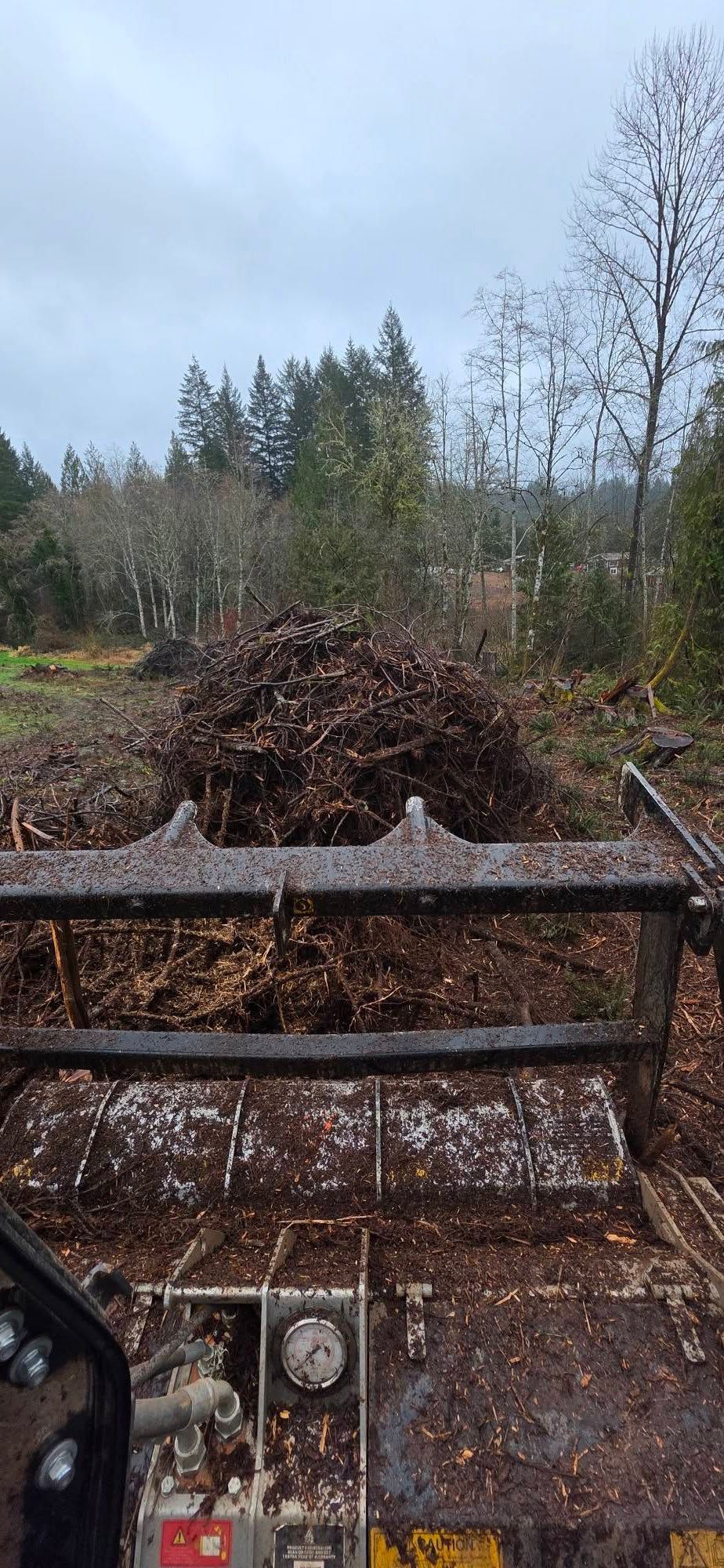
How Mitigation Improves Long-Term Property Safety
Mitigation establishes zones where fire behavior changes—cleared areas near structures reduce radiant heat exposure, thinned vegetation lowers flame lengths and spread rates, and maintained access roads allow firefighting equipment to position effectively. The work does not eliminate fire risk, but it shifts conditions in your favor by removing the easiest fuel sources and creating barriers that slow fire progression.
After mitigation, the property shows visible separation between structures and dense vegetation, access roads are clear and wide enough for emergency vehicles, and fuel loads around buildings are reduced to levels that limit fire intensity. These changes also improve everyday usability—you gain better sight lines, easier property monitoring, and reduced pest habitat near living areas. Properties with mitigation in place are more likely to receive defensive firefighting efforts during wildfire events, as accessible, lower-fuel zones allow safer crew deployment.
Effective mitigation requires maintenance because vegetation regrows and dead material accumulates over time. Yearly inspections and periodic clearing keep defensible zones functional, particularly in areas where invasive species or fast-growing brush reestablish quickly after initial clearing.
Common Fire Mitigation Questions
Property owners preparing for wildfire season often need help understanding what mitigation involves, how much clearing is necessary, and how to balance safety with maintaining the natural landscape.
What is defensible space and how is it created?
Defensible space consists of zones around structures where vegetation is cleared, thinned, or maintained to reduce fuel loads—the first zone extends thirty feet from buildings with minimal flammable material, while outer zones extend further with selective thinning and spacing of trees and shrubs.
How does fire mitigation differ from standard land clearing in Battle Ground?
Mitigation focuses on reducing fire behavior rather than removing all vegetation, which means selective thinning, pruning lower branches, and managing fuels strategically rather than clearing properties to bare ground.
What vegetation can remain after mitigation?
Healthy, well-spaced trees and fire-resistant plants can remain outside immediate structure zones, provided they are pruned to remove ladder fuels and spaced to prevent crown fire spread based on slope and exposure.
When should mitigation work be completed?
Late winter or early spring allows clearing before fire season and avoids nesting bird conflicts, while fall work after seasonal rains minimizes dust and fire risk during the project itself.
Why is mitigation important for properties with private road access?
Overgrown roads limit emergency vehicle access and create escape route hazards during evacuations—cleared roads improve response times and provide safer egress when fire threatens rural properties with limited exit options.
RAM Landclearing Inc. completes fire mitigation projects with attention to reliable execution and long-term land safety. Contact us to prepare your property and establish defensible space that reduces wildfire risks before high-risk conditions return each summer.