
Site Preparation Without Hauling or Burning
Mulching in Battle Ground for Brush Clearing, Trail Development, and Overgrown Lot Restoration
Dense brush, saplings, and undergrowth cover properties throughout Southwest Washington, blocking trails, fence lines, and building sites with vegetation too thick for mowers but not large enough to justify logging. Forestry mulching processes this material in place, grinding brush and small trees into a soil-friendly layer that suppresses regrowth and eliminates the need for debris hauling. RAM Landclearing Inc. uses mulching equipment capable of handling difficult terrain and thick vegetation common on sloped lots, heavily wooded acreage, and neglected parcels where traditional clearing methods leave piles of debris that require additional handling.
The process involves a tracked mulcher that cuts, grinds, and spreads vegetation in a single pass, leaving a layer of organic material that protects soil, reduces erosion, and breaks down over time. Mulching works for trail systems, property perimeters, fence line clearing, and acreage maintenance where preserving topsoil and minimizing ground disturbance matter more than complete vegetation removal.
Arrange a property walkthrough to assess vegetation density and determine if mulching suits your clearing goals.
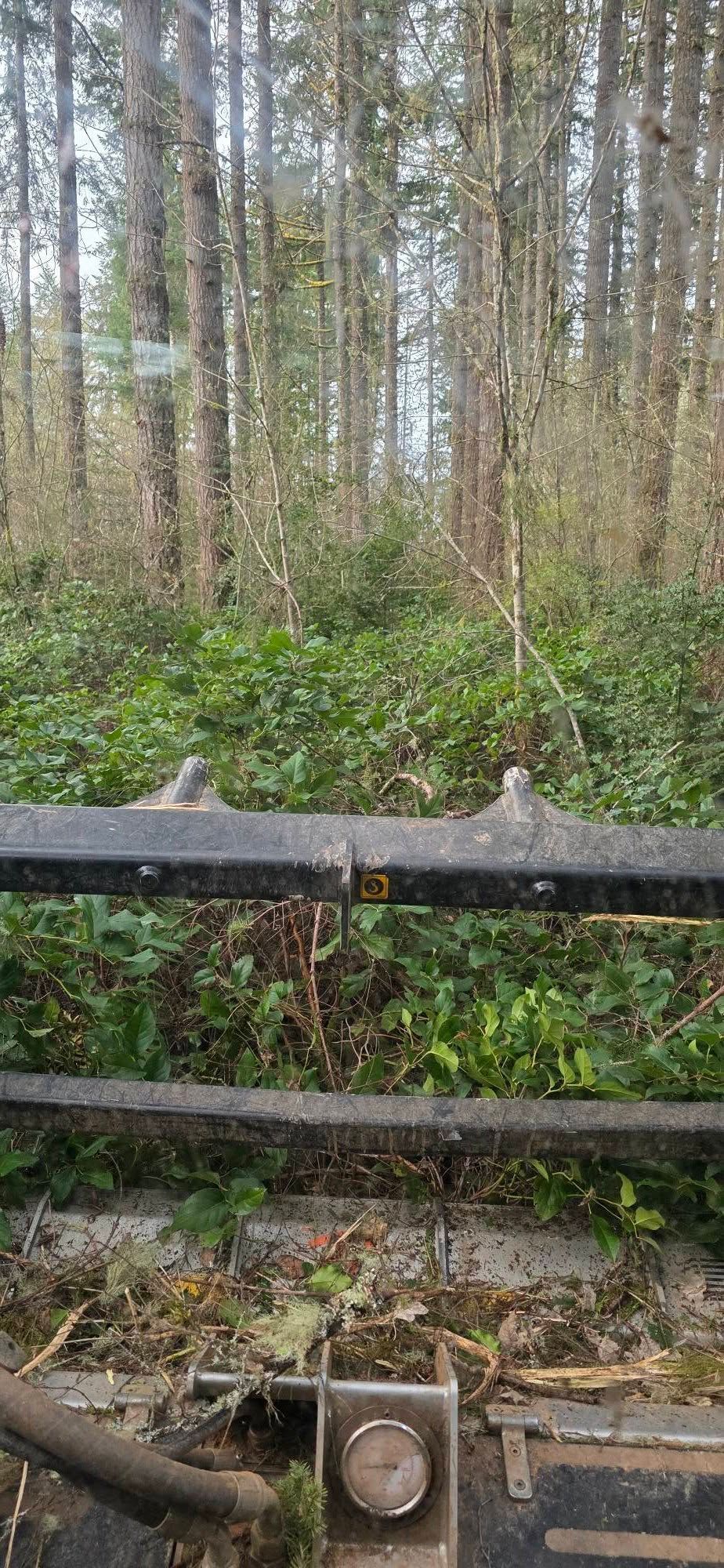
What Mulching Accomplishes on Overgrown Properties
Mulching eliminates standing vegetation and converts it into groundcover in one operation, which speeds site preparation compared to cutting, piling, and hauling. The mulch layer discourages seed germination and shades out light-dependent invasives like Scotch broom, slowing regrowth without herbicide application. Modern forestry mulchers handle material up to six inches in diameter, processing blackberry thickets, salal, vine maple, and alder saplings that would otherwise require hand cutting and multiple equipment passes.
After mulching, the site is immediately accessible—trails become walkable, fence lines are visible, and property boundaries are clear without burn piles or debris windrows blocking access. The mulched surface provides traction on slopes, absorbs rainfall, and prevents the mud and rut formation common on freshly cleared sites during wet months. You see defined edges, restored sight lines, and open ground ready for planting, grading, or simply maintaining as managed open space.
Mulching does not remove stumps or root systems, so properties requiring grading, excavation, or construction typically need stump grinding or removal as a follow-up step. The method works best where vegetation control and access restoration are primary goals rather than ground-level site prep for building.
Questions Property Owners Ask About Mulching
Mulching offers advantages in speed and soil preservation, but understanding its limits and applications helps determine when it fits your project better than conventional clearing.
What size vegetation can mulching equipment handle?
Forestry mulchers process brush, saplings, and trees up to six inches in diameter efficiently—larger timber requires felling and removal with separate equipment before mulching clears the remaining understory.
How does mulched material affect the soil?
The mulch layer adds organic matter as it decomposes, improves moisture retention, and reduces erosion on slopes, though properties with plans for immediate planting may need the mulch layer thinned or incorporated to avoid nitrogen tie-up during decomposition.
When is mulching preferred over traditional clearing in Battle Ground?
Mulching works well for properties where debris removal is costly or impractical, where soil disturbance must be minimized, or where the goal is vegetation control rather than preparing a construction-ready site.
What remains visible after mulching is complete?
The property shows cleared ground covered with shredded organic material, stumps and root systems remain in place, and the landscape appears park-like with defined open areas and retained mature trees if specified.
How long does mulched material take to decompose?
Decomposition depends on material type and moisture—softer brush and leaves break down within one to two years, while woody material from larger saplings may remain visible for three to five years before fully integrating into the soil.
RAM Landclearing Inc. completes mulching projects that improve property accessibility and appearance while managing vegetation efficiently. Contact us to schedule an on-site evaluation and receive a project estimate based on your acreage and vegetation conditions.